A Cell Phone Camera is NOT a “Get Out of Jail Free” Card

The proliferation of recording devices has resulted in a new reality for police officers: encountering civilians who are recording them as they do their job. While the Supreme Court has yet to give law enforcement officers a clear definition of the constitutional right to record (subject to reasonable time, place and manner restrictions), the writing is on the wall.

The overwhelming majority of courts that have taken up the question have concluded that the First Amendment prohibits officers from infringing upon a civilian’s right to record them in public while performing their official duties. This is particularly true when there is no question as to whether or not the civilian was lawfully present—meaning that the civilian was not ducking below police tape or otherwise placing themselves into a position where they are putting officer safety and/or investigations into jeopardy. Arrests motivated by the fact that a recording was taking place where a civilian was lawfully present have been tossed out by local prosecutors and have resulted in a multitude of lawsuits and settlements. Yet the YouTube® footage going viral often shows officers angrily asserting the act of recording is illegal.

Avoiding an Over-Correction

In response to this clear momentum, law enforcement agencies across the country are publicly acknowledging that recording officers is not an arrestable offense in and of itself, absent exigent circumstances. Many of these agencies are also instructing their personnel to respect the First Amendment right of civilians to record.

But how many of these agencies are actually training their people to recognize that a civilian’s right to record in many instances is not an affirmative defense to charges independent of the act of recording? It is crucial that officers have a keen understanding of the difference between arresting someone for recording them in public versus arresting someone while they happen to be recording them in public. This distinction is a crucial one.

It seems clear that agency leaders do not want officers stopping, questioning and even arresting an individual simply for recording. But it should be equally clear that agency leaders do not want officers refraining from utilizing their discretion to stop, question or arrest as a result of the mistaken belief that individuals with camera phones in their hands present a heightened standard for reasonable suspicion or probable cause.

Situations in which officers approach a suspect and are confronted with a camera are now commonplace. If officers “over-correct” in their interactions with the public and refrain from taking actions they would otherwise deem appropriate due to a misunderstanding of the limits of the First Amendment right to record, police operations and public safety could suffer.

Understanding a Civilian’s Right to Record and the Limitations of that Right

The importance of striking this balance is illustrated by two cases from the First Circuit. In the Glik v. Cunniffe case, the plaintiff was walking past the Boston Common when he came upon three officers arresting an individual. The plaintiff pulled out his cell phone and began recording the arrest from “roughly ten feet away”.1 The case facts do not indicate that he ever advanced closer to the officers or spoke to the officers until one of the officers approached and addressed him. When he refused to put his cell phone away, he was arrested on the charge of violating the Massachusetts wiretapping statute.

In finding for the plaintiff in Glik, the First Circuit stated that “[t]he filming of government officials engaged in their duties in a public place, including police officers performing their responsibilities, fits comfortably within [First Amendment] principles. Gathering information about government officials in a form that can readily be disseminated to others serves a cardinal First Amendment interest.” 2 The following year, the Federal District Court of New Hampshire, encountered another case of a civilian recorder being arrested but found in favor of the officers. In Bleish v. Moriarty, the plaintiff physically interfered with lawful police arrests at a protest demonstration.3 The plaintiff was within one foot of an officer, reaching into the squad car to interview an arrestee, constantly and loudly asking questions of the officers, and refusing to comply with repeated officer requests to back away and allow the officers to do their job.

In finding for the officers, the court stated that “[t]he video recordings do show that she was arrested while she was engaged in activities that are ordinarily protected by the First Amendment, but being arrested while exercising constitutional rights is very different from being arrested for exercising those rights.” (emphasis added)4

The Need for Practical Guidance

Beyond the First Circuit, courts have given guidance to law enforcement indicating that criminal offenses such as criminal obstruction can and have been engaged in while a recording is also taking place. But practical guidance for officers on the street is in somewhat short supply. So, it makes sense that agencies should be training officers to answer the following questions:

  • Can I articulate to this individual—knowing that I am being recorded—why I have stopped them and/or what law I suspect they have violated?
  • Can I justify my actions separate and apart from the fact that a recording was taking place?
  • Can I affect the stop or arrest without continually discussing the recording device, keeping in mind that by focusing on the recording device I can create the appearance that the camera was a motivating factor in my decision-making?
  • Can I write a report that treats the camera as a mere footnote?

Officers should be trained to recognize that these questions are crucial in an age of unprecedented transparency and to understand that if the answers to these questions are unequivocally “yes”, then the officer’s actions are likely well within the confines of the Constitution.

Officer interactions with individuals who are recording them is a frequent and foreseeable occurrence. It should be made clear to officers and civilians that none of the emerging case law indicates that the activation of a recording device serves as a “get out of jail free” card for civilians engaging in unlawful activity. The challenge for law enforcement agencies is to confer with legal counsel and engage in pro-active training that prepares officers to utilize common sense discretion in the field when confronted by individuals seeking to shelter unlawful activities under the umbrella of the right to record officers.

References

1 Glik v. Cunniffe, 655 F.3d 78 (1st Cir. 2011)

2 Id.

3 Bleish v. Moriarty, 2012 DNH 118 (D.N.H. 2012)

4 Id.

What Effects do School Resource Officers Have on Schools?

Over the last two years there has been a small, but very vocal, segment of the U.S. population that has raised concerns in opposition to having law enforcement officers permanently assigned to schools as school resource officers (SROs). Those in opposition to school resource officers have claimed that assigning officers to schools has resulted in youths being formally arrested for minor conduct issues that would have otherwise been handled informally by school staff if the SROs had not been present in the school. They have suggested that SROs have resulted in thousands of children being marked for life with criminal records for behaviors that previously would only have resulted in minor in-school discipline. They claim that the presence of SROs in schools has contributed to the disproportionate confinement of minority youth because they are disproportionately assigned to schools in minority neighborhoods, and that by arresting minority youth for minor offenses, it gives them a criminal record that will follow them the rest of their lives. In sum, many argue that police officers in schools are responsible for a “school to prison pipeline.”

One should ask, however, are these allegations supported by the research evidence? To date, there is very little social scientific research regarding SROs and their roles and operations within schools. This research brief will review the small set of existing social scientific research studies about SROs to see what impact they appear to have on students and schools.

Not All School Resource Officers are Alike

The first important research finding is that SROs are individuals and, like all people, individual school resource officers act differently from one another. Therefore, examples can likely be found of individual SROs who have taken an unnecessarily heavy enforcement stance toward student conduct problems, and others who have not. Undoubtedly, officers with temperaments unsuited for working with children and youths should not be assigned to SRO positions. However, solely focusing on isolated incidents receiving national media attention is not a reasonable way to determine the effects of the thousands of SROs assigned to schools throughout the country.

It is also important to keep in mind that every jurisdiction has different rules, policies, and organizational tables for their SRO programs. While some agencies require SROs to engage in some teaching activities, or deliver the D.A.R.E. or G.R.E.A.T. programs, other agencies strictly limit their SROs to law enforcement and order maintenance duties. School districts also vary in the amount of control school administrators have over the roles, responsibilities, and actions of the SROs within their schools. These jurisdictional differences undoubtedly also impact how SROs engage in their work. The following research findings will discuss the limited amount of research to date on SROs and the general trends that have been revealed thus far. It is important to keep in mind, however, that not all SROs fit into the general trends.

Are SROs Too Enforcement Oriented?

The most publicized study to examine this question used data from a nationwide survey of 470 high school and middle school principals in the U.S. from 2003 through 2008. This study, conducted by researchers at the University of Maryland, found that schools with SROs reported more serious crimes, more minor crimes, and higher rates for student expulsions than schools without SROs (Na & Gottfredson, 2013). While the authors of this study immediately jumped to the conclusion that the presence of SROs caused normal problem student behaviors to be treated as serious crime, and to be punished more severely through arrests and expulsions, it is also just as likely that they have the order reversed. In other words, this study fails to address the likelihood that SROs tend to be assigned to schools that already have significant crime and problem student behavior issues, and less likely to be utilized in schools that do not experience as severe safety and student conduct issues.

In a more thorough and controlled study, published in 2009, a researcher from the University of Tennessee examined school discipline data for 28 middle and high schools in the Knoxville metropolitan area over a three-year period (Theriot, 2009). Thirteen of these schools were assigned SROs, and the remaining 15 schools called patrol officers when law enforcement assistance was needed. No differences were found between the schools in the overall number of arrests per student, suggesting that SROs arrested just as frequently as schools that relied on calling patrol officers. Compared to schools without SROs, schools with SROs experienced fewer arrests for serious crimes such as assault and weapons charges, and more arrests for disorderly conduct charges. The researcher also examined the SRO schools before an SRO was assigned to the school, and after the SRO was assigned. After an SRO was assigned, the schools experienced fewer arrests for felony and violent misdemeanor offenses, and more arrests for disorderly conduct charges.

These findings suggest that SROs, although they are exposed to more student criminal and misconduct situations than are patrol officers, arrest students at equal rates as patrol officers. The evidence in this study also suggest that when SROs do arrest students, they tended to downgrade the severity of the charges against the student to disorderly conduct rather than an assault or felony charge.

A study by researchers at Mississippi State University examined statewide juvenile court data from 2009 through 2011. They wanted to see if charges brought by SROs differed from charges brought by other types of officers (May, Barranco, Stokes, Robertson, & Haynes, 2016). This study found that SROs and other types of officers were equally likely to refer juveniles to the juvenile court when encountering a report of a felony offense. The study also found, however, that SROs were less likely to refer juveniles to the juvenile court for misdemeanors or status offenses. This study suggested that most SROs act no differently than other officers when it comes to felony crimes. It also suggested that SROs are more lenient than are patrol officers when encountering misdemeanor and status offenses.

Researchers from Eastern Kentucky University were interested in how school principals perceived the presence of SROs within their schools (May, Fessel, & Means, 2004). Surveying 119 elementary, middle, and high school principals across Kentucky, they found that 98% of principals supported SROs in high schools, and 94% supported SROs in middle schools. Fifty percent even supported SROs in elementary schools. The vast majority of principals (92%) believed that SROs in their state were properly trained and acted appropriately. Most (88%) of those who had SROs in their schools reported that crime decreased in their schools after SROs were assigned. These findings suggest that school principals in Kentucky overwhelmingly approve of SROs.

What is the Role of the SRO?

Interviews with SROs themselves also reveal that SROs are far more than agents of law enforcement in schools. One study by Texas State University interviewed a small sample of 26 SROs from across Texas (McKenna, Martinez-Prather, & Bowman, 2016). These interviews revealed that, in addition to their law enforcement role, 46% of SROs described their role as that of a social worker, 38% described their role as an educator, and 35% described their role as being a surrogate parent.

A similar study conducted by the University of Nebraska at Omaha surveyed 52 SROs and 320 patrol officers around the Omaha metropolitan area (Rhodes, 2015). Compared to patrol officers, SROs performed fewer law enforcement tasks (issuing citations, making arrests, and investigating crimes) in a given work day, and also performed fewer order maintenance duties (handling disputes and disorderly persons). Compared to patrol officers, SROs spent more time on non-crime service related activities, such as giving advice, medical assistance, community relations activities, and traffic direction. SROs also had higher levels of job satisfaction when compared to patrol officers.

Conclusion

There have been very few social scientific studies about SROs, but the studies that have been conducted so far do not indicate that the presence of SROs creates a “school to prison pipeline” in which children are saddled with criminal records for behaviors that previously would only have resulted in minor in-school discipline. SROs generally appear to be more lenient than are patrol officers when dealing with minor student criminal behavior and conduct problems. But there seems to be no difference between SROs and patrol officers when dealing with serious felony crimes.

The available evidence indicates that SROs tend to see their role as that of a social worker, educator, and surrogate parent to the students. The work that they do tends to focus on service activities unrelated to crime and disorder, but principals still tend to notice reductions in crime and conduct problems when SROs are present. School principals generally approve of the presence of SROs at high schools and middle schools, and sometimes even at elementary schools.

No empirical research evidence was found to suggest widespread actions by SROs in the U.S. to criminalize the minor behaviors of students in general, or minority students in particular. The general pattern is that SROs make arrests under the same circumstances that would cause a principal to call the police if an SRO were not already present.

Furthermore, SROs create the opportunity for school-aged children to have non-confrontational, non-enforcement contacts with law enforcement officers. that may contribute to more positive opinions of the police later in life. Finally, the known presence of an SRO on campus may enhance the safety of our children, as the mass shootings at grade schools in the U.S. to date have not occurred at schools with an SRO presence. The research to date does not support the “school to prison pipeline” theory, and further research may well support the widespread belief held by principals that the use of SROs tends to have a positive impact on schools and students.


References

May, D. C., Barranco, R., Stokes, E., Robertson, A. A., & Haynes, S. H. (2016). Do school resource

officers really refer juveniles to the juvenile justice system for less serious offenses? Criminal Justice Policy Review.

May, D. C., Fessel, S. D., & Means, S. (2004). Predictors of principals’ perceptions of school resource 

officer effectiveness in Kentucky. American Journal of Criminal Justice, 29(1), 79-100.

McKenna, J. M., Martinez-Prather, K., & Bowman, S. W. (2016). The roles of school-based law 

enforcement officers and how these roles are established: a qualitative study. Criminal Justice Policy Review, 27(4), 420-443.

Na, C., & Gottfredson, D. C. (2013). Police officers in schools: effects on school crime and the processing 

of offending behaviors. Justice Quarterly, 30(4), 619-650.

Rhodes, T. (2015). Officers and school settings: examining the influence of the school environment on 

officer roles and job satisfaction. Police Quarterly, 18(2), 134-162.

Theriot, M. T. (2009), School resource officers and the criminalization of student behavior. Journal of 

Criminal Behavior, 37, 280-287.

Biased-Based Policing Reports Are Failing the Police and the Community

Recent public opinion surveys have revealed that the vast majority of Americans believe that use of racial profiling by the police is widespread.1 This is deeply disturbing for two reasons. First, it is disturbing because it undermines police legitimacy among the vast majority of our citizens. Second, it is disturbing because the vast majority of law enforcement officers I have known do not engage in bias-based policing. While racial profiling likely occurs among a small number of individual officers acting outside the bounds of their oath to uphold the Constitution, it is unlikely that racial profiling is systemic to law enforcement in the United States.

This begs the question, then, why do so many people perceive that racial profiling is widespread? We could blame individual members of the news media that seek to raise their ratings by stoking the flames of controversy, or certain protest organizations that seek to capitalize on distrust of the police. To be sure, these sources have contributed to the problem. Another factor that has also contributed to the problem, however, is the fundamentally flawed information that many law enforcement agencies have given the public through their biased-based policing data that was gathered and reported incorrectly.

Many law enforcement agencies gather data on the race and gender of the individuals their officers stop, search, and arrest. They report these data to the public in a biased-based policing report. Agencies produce these reports for a variety of reasons, such as statutory requirements, as part of their compliance with CALEA Standard 1.2.9.d, or simply out of a sincere desire to embrace transparency. While most law enforcement agencies, and individual officers, claim they do not racially profile, the vast majority of these reports show members of minority groups, especially African-American men, are disproportionately stopped, searched, and arrested. Why? One factor at work is the use of incorrect research methodologies and measures that are biased (often unintentionally) against officers from the start. One of the most damaging of these incorrect methodologies is the use of U.S. Census data as a benchmark comparison.

Benchmarks

In order for any racial profiling data collection activity to be meaningful, the racial composition of police stops, searches, and arrests need to be compared to something. A benchmark is generally defined as a point of reference from which measurements may be made; something that serves as a standard by which others may be measured or judged; or a standardized problem or test that serves as a basis for evaluation or comparison. In the context of biased-based policing evaluations, a benchmark is the percentage of a racial or gender group that one would expect to be encountered if officers were not biased.

For example, imagine that 20% of the people speeding down a particular stretch of roadway were male and Hispanic. This makes 20% our benchmark for speeding stops of male Hispanics. We would expect that unbiased stops by police for speeding in this area would show that only about 20% of those stopped for speeding were male Hispanic drivers. However, where do we get these benchmarks? Unfortunately, most of the benchmarks used are fatally flawed. These flawed benchmarks consistently suggest officer bias, regardless of what officers are actually doing. The most common flawed benchmark is U.S. Census data.

Census Data

The U.S. Census Bureau collects data on the social and demographic characteristics of the individuals who live within the U.S. This data is freely and easily accessible from the U.S. Census Bureau website and can be analyzed within different geographic regions, down to the zip code and census block levels. Many have used Census data as their benchmark for police activity because of its ease of access. The problem, however, is that the demographic characteristics of the people living at any one location have nothing to do with the driving population there, nor who is breaking the law in any specific area. We use our vehicles to travel to places away from our homes, as people generally do not work, shop, or recreate in their homes. Two studies illustrate this well.

The first study, conducted by sociologists Albert Meehan and Michael Ponder at Oakland University, examined the racial composition of drivers across one suburb in the Detroit area. According to the U.S. Census, the suburb they studied had a population that was 3% AfricanAmerican, but the city also contained a popular shopping district and a major auto factory. The researchers placed pairs of observers at major intersections across the three police beats in the city, and the observers recorded the races of 3,840 drivers who stopped at these intersections. Despite the city Census population of 3% African-American, in the police beat that bordered the city of Detroit, 49% of the drivers were African-American. The other two beats revealed 11% and 3% of the drivers were African-American.2

Think about that. What if the officers working these different beats stopped African-American drivers as the exact rates that African-Americans drove in these beats? Any study of this particular suburb using 3% African-American as its benchmark would falsely claim that officers working in two of the beats were racially profiling. When the stops from all three beats are combined as department-wide data, the whole department would incorrectly appear to be racially profiling because more than 3% of their stops were of African-American drivers, despite the fact AfricanAmericans actually made up far more than 3% of the drivers on the road.

Another example was a study, of which I was a part, that was conducted by a research team headed by criminologist Robin Engel at the University of Cincinnati. This study examined 315,705 traffic stops conducted by troopers of the Pennsylvania State Police. These stops occurred on interstate highways, U.S. highways, state routes, county roads, and village and city streets. An examination of these stops revealed that 96% of drivers stopped by the police were stopped outside of their home zip codes. Furthermore, 66% were stopped outside of their home county, and 27% were stopped outside of their home state. This study went on to conduct observations of the races of 66,741 drivers along various roadways in 27 counties of Pennsylvania. When compared to the Census statistics for each township where these observations were made, the Census statistics on race never matched the racial composition of the drivers that were observed.3 Census data is no reflection of who is driving in a given area.

Not only are Census statistics inaccurate measures of who is driving in any given area, Census data also fail to identify the racial and ethnic composition of who should actually be stopped by the police. Just because 49% of the drivers in a police beat are African-American, that does not mean 49% of the people stopped by officers should be African-American. If African-Americans were stopped just because they are driving in an area, without having done anything wrong, this would amount to stops for “driving while black.” Instead we need a measure of the racial composition of the drivers who are driving poorly by breaking traffic laws and driving unsafe vehicles (equipment violations). It is traffic law violators who should be at risk of traffic stops if no bias is present. The Census data in no way measures driving behavior.

Alternative Benchmark

So what should be used as a proper benchmark for these types of reports and studies? Hiring a group of researchers to go out and record the races and traffic violations of drivers across your jurisdiction is usually too time-consuming and expensive for most law enforcement agencies. A simple solution, however, is to collect race and ethnicity data on all traffic crashes in your jurisdiction and use this data as your driver benchmark. While no state currently collects race data on its state vehicle crash form, if your agency starts collecting race data in-house, your agency will eventually have a benchmark of bad drivers across the various beats of your jurisdiction.

Using traffic crash data as a traffic stop benchmark has a number of advantages. First, it identifies the drivers most likely to be stopped because crashes result from moving or equipment violations of the law. While there are some people who are blameless for their crash (such as the person waiting at a red light who is hit from behind), all crashes had at least one driver or equipment error at fault, and many had multiple drivers at fault. Second, officers investigating traffic accidents can verify the race and ethnicity of the driver when they complete their report, as opposed to a researcher trying to determine a driver’s race in a passing car. Third, as traffic crashes occur almost everywhere (even off of public roadways in parking lots and driveways) they are good samples of the bad driver or poorly maintained vehicle population throughout a district or beat. Research observers tend to focus just on certain thoroughfares. Finally, crash data come from the citizenry who report crashes to the police, so no suggestion can be made that there was bias by the police in gathering this data.4

If you agency is currently using Census data as your benchmark, it is imperative that you stop immediately and find a valid benchmark like the alternative discussed here. Using Census data is rigged against your officers as it almost always suggests disproportionate stops of minority group members, even when no officer bias occurred. If some outside individual or organization proposes to analyze your officers’ stops using Census data as their benchmark, oppose it vehemently, using the studies cited here to support your argument. If your state collects statewide data, as does Illinois, Missouri, and Texas, lobby your state lawmakers to stop using Census data as the benchmark comparison and begin to collect valid benchmark comparison data by modifying the state vehicle crash form to include race and ethnicity information.

Conclusion

The overwhelming majority of racial profiling studies done by academics, and biased-based policing self-examinations by police departments, have produced results that people of color, especially African-Americans, are disproportionately stopped by the police.5 It is likely, however, that the majority of these findings are in error as most relied on methodological errors that were guaranteed to show bias even when there was none. Using Census statistics as a benchmark, that in no way resemble the driving population or the traffic violator population, is just one of these many methodological errors.

The Dolan Consulting Group LLC now offers a training workshop that addresses these many errors, and offers suggestions on how to correct them. Biased-Based Policing Reports: Best Practices is a one-day course that teaches personnel from law enforcement agencies how these studies should be conducted and their reports written. It explains how to collect, analyze, and present your information in a manner that creates the least chance of misinterpretation or manipulation by the media, and presents the work of your agency in a fair manner. The information offered in this workshop is crucial to the creation of a data collection effort and report that is truly unbiased against the hard-working and principled officers who are policing their communities in a fair and impartial manner.


References

1 Weitzer, R., & Tuch, S. A. (2005). Racially-biased policing: determinants of citizen perceptions. Social Forces, 83(3), 1009-1030.

2 Weitzer, R., & Tuch, S. A. (2005). Racially-biased policing: determinants of citizen perceptions. Social Forces, 83(3), 1009-1030.

3 Engel, R. S., Calnon, J. M., Tillyer, R., Johnson, R. R., Liu, L., Wang, X. (2005). Project on Police-Citizen Contacts: Year 2 Final Report. Cincinnati, OH: University of Cincinnati.

4 Withrow, B. L., & Williams, H. (2015). Proposing a benchmark based on vehicle collision data in racial profiling research. Criminal Justice Review, 40(4), 449-469.

5 Withrow, B. L. (2006). Racial Profiling: From Rhetoric to Reason. Upper Saddle River, NJ: Pearson / Prentice Hall.

Getting Rid of Bad Apples: Winning at Arbitration

Research has repeatedly revealed that a very few individuals commit the vast majority of the serious misconduct experienced within public agencies—from law enforcement to the fire service to public schools. For example, one study in Chicago found that only 4.5% of elementary school teachers and administrators were responsible for the falsification of the standardized test scores of more than 19,000 students.1 Studies of sexual misconduct by grade school teachers and public university professors have estimated that between 4% and 7% of educators account for all cases of sexual misconduct against students.2

A study examined citizen complaints across 165 law enforcement agencies in the state of Washington, finding that less than 5% of the officers on those agencies were responsible for 100% of the sustained citizen complaints.3 Another study examined 15-years of citizen complaint and internal misconduct data within one urban police department in the state of New York. It found that about 6 percent of the officers employed by the department over those 15 years accounted for almost all of the internal and external allegations of misconduct.4

Finally, a third study of “bad apples” in the context of law enforcement examined more than 5,500 citizen complaints against officers on eight police departments from mid-sized cities. It found that 79 percent of the officers on these departments received no sustained complaints at all during the study period, and another 16 percent received only one sustained complaint. Approximately 5 percent of the officers, however, had multiple sustained complaints, with a small group of 47 officers accounting for almost half of all sustained complaints. This small group of 47 officers made up 2 percent of all officers on the eight departments, but generated more than 100 excessive force allegations, 200 discourtesy allegations, and numerous other misconduct complaints.5

These are problem-prone employees, often referred to as “bad apples,” and they create havoc within their respective government agencies. They routinely damage relations with the public, bring discredit to their agencies, and place their peers at risk for danger and lawsuits. In this modern age of video cameras everywhere, and YouTube® videos capturing and broadcasting bad behavior, the antics of these problem-prone employees are increasingly on display for the world to see. While removing bad apples has clear benefits for the well-being of the community and the reputation of the agency, many public sector leaders have argued that their ability to terminate these problem employees is being undermined and eroded by the grievance arbitration process.

Over the last few decades, there have been numerous instances of police departments, schools, fire departments, and other government agencies terminating a problem employee for serious misconduct, only to have an arbitrator later reinstate the employee. In fact, at arbitration, public agencies only prevail about 50% of the time, with the other 50% resulting in the arbitrator either vacating or reducing the severity of the punishment the employer gave the employee.6 Situations such as these have caused some to question the legitimacy of the workplace grievance arbitration process.

But does the available research reveal a fundamentally flawed arbitration system that inevitably disrupts attempts to discipline or does it indicate a wide-spread failure by supervisors to make disciplinary decisions in a way that is defensible in the face of scrutiny? Current research on grievance arbitration cases does not reveal that arbitrators either ignore the evidence or simply seek to mediate a “middle ground” punishment between the employer and the union. There are clear reasons upon which the arbitrators base their decisions to overturn or reduce punishments. The research on grievance arbitrations has repeatedly revealed that when an arbitrator reverses an employer’s termination decision, the arbitrator almost always clearly articulates a legitimate reason for the reversal, and there is often more than one reason. Most reversals involved true errors made by the employer while investigating or punishing the misconduct, and when employers attempt to appeal the arbitrator’s ruling through the courts, trial and appellate court judges generally uphold the arbitrator’s decision for the same valid reasons originally articulated by the arbitrator.7

The Reasons for Arbitration Reversals

Dolan Consulting Group research staff recently conducted an in-depth analysis of 600 cases of public sector employee suspensions and terminations that went to review by some sort of external arbitrator (i.e., union grievance arbitrator, civil service board, state human resources commission, etc.). These cases involved law enforcement agencies, prisons, schools, probation departments, fire departments, emergency medical services agencies, and public works departments. In 50% of the cases the external arbitrator reversed or reduced the employer’s discipline. In analyzing these cases, the Dolan Consulting Group staff was able to identify the five most common reasons given by arbitrators to justify their decisions to reverse or reduce discipline.

Disproportionate Punishment

The most common reason cited for overruling the employer’s discipline was that punishment was distributed unfairly. In most cases this involved situations where two employees, who shared similar past work histories, committed similar acts of misconduct, yet one employee was punished far more severely. Employees must be treated fairly when being given punishments and the only aggravating or mitigating circumstance that can justify different punishment outcomes for the same type of behavior is a recent past record of other misconduct. Arbitrators in the cases we studied overturned punishments if it appeared the severity of the punishment depended on anything else, including the employee’s rank, years of experience, attitude, or lack of remorse.

Also, and to a lesser extent, disproportionate punishment referred to a punishment that was disproportionate in severity to the act of misconduct. In other words, it involved a minor act of misconduct that was given a severe punishment rather than a minor punishment or retraining in the spirit of progressive discipline.

Insufficient Evidence

The second most common justification for overturning employer discipline involved insufficient proof of misconduct. While courts usually utilize the “preponderance of the evidence” standard of proof in civil cases, including workplace grievance lawsuits, arbitrators generally use a higher standard of proof. When reviewing employer discipline involving suspensions or terminations, arbitrators tend to use the “clear and convincing” evidentiary standard, which is a higher standard of proof than a preponderance of the evidence. If an employer utilizes the lower standard of proof when determining whether an employee committed a particular act of misconduct, the employer risks having the discipline overturned by an outside arbitrator.

Due Process Violations

The third most common reason arbitrators overturn a public employer’s discipline is that the employer violated the employee’s due process rights when investigating the employee misconduct, determining guilt, or assigning punishment. Public employees are afforded certain rights within each state by statute and legal precedent. These rights generally include a complete and impartial investigation, notice of the charges against the employee, an opportunity to challenge the charges, and a determination of guilt by an unbiased hearing officer. No matter how serious the employee’s misconduct, and no matter how much evidence there is against the employee, if the employer violates these rights, the discipline is likely to be overturned.

Procedural Errors

Procedural errors, such as failing to follow written policies or the agency’s collective bargaining agreement, came next in frequency as a justification to overturn an employer’s discipline. If an employer fails to follow any of its own written procedures for handling employee discipline, it risks having its discipline overturned. The same is true for violations of its collective bargaining agreement with its employee’s union. If there is a time limit for filing misconduct charges, for example, then this time limit must be met. If the contract permits employees to have a union representative present during questioning, then a union representative must be contacted and be present. A failure to follow these procedural requirements can result in the overturning of otherwise reasonable discipline.

Employee’s Past Record of Good Performance and Other Mitigating Circumstances

To a much lesser extent, other mitigating circumstances were mentioned by arbitrators as additional justifications for overturning an employer’s discipline. The most common of these was the employee’s past record of good performance. When issuing punishments, arbitrators expected employers to show lenience toward employees with lengthy employment histories of outstanding past performance. Arbitrators also expected employers to demonstrate some form of harm that resulted from the employee’s misconduct in order to justify the punishment. Finally, arbitrators tended to review the circumstances surrounding the misconduct by what was objectively reasonable from the perspective of the employee at the time, rather than the reality of facts that were determined later.

Making Discipline Stick

Dolan Consulting Group staff have taken the findings from this research study and developed an evidence-based course to not only educate public employers about these five reasons for discipline reversals, but also provide strategies for ensuring that discipline is delivered in a fair manner that will stand up to external arbitrator review. Called Making Discipline Stick, this new course is designed to assist supervisors, human resources professionals, attorneys, agency executives, and union leaders in the public sector by increasing their knowledge about what most frequently causes discipline to be overturned. When arbitrators give a written justification for their decision, they often provide cautions or advice to the employer about how the case should have been handled. This course uses these very words and insights from the arbitrators to help public sector agencies improve the fairness of their disciplinary processes and increase the likelihood the employee discipline they hand down will remain in place after arbitrator review.

Conclusion

Research has firmly revealed that the vast majority of serious misconduct in public agencies is committed by a small number of “bad apple” employees, usually only about 5% of an agency’s employees. Unfortunately, due to five common errors, when corrective action and discipline is employed to address the conduct of these bad apples, this discipline is overturned about half of the time. As a result, the corrective action fails in its purpose, and sometimes the problem employee becomes more emboldened, believing that he or she is impervious to discipline from the employer.

In order to prevail when faced with external review by some sort of arbitrator, employers need to ensure that employee misconduct is investigated fairly and that punishment decisions are consistent with the rules followed by the courts and arbitrators. Employers need to ensure that their punishments given are consistent, fair, and proportionate to the severity of the misconduct. They need to ensure that they gather sufficient evidence to meet the “clear and convincing” evidentiary standard when dispensing suspensions or terminations. Employers need to observe and protect all of the employee’s due process, statutory, and contractual rights. They must also consider the employee’s prior work performance record and the facts of the case as they appeared to the employee at the time.

By taking the time necessary to ensure that these steps are followed, public sector leaders can improve the fairness of their employee disciplinary processes, and dramatically increase the likelihood that an arbitrator will fully support the employee discipline that is given – making discipline stick for the sake of the agency’s mission, the overwhelming majority of employees and the public they serve.


References

1 Jacob, B. A., & Levitt, B. A. (2003). Rotten apples: an investigation of the prevalence and predictors of teacher cheating. The Quarterly Journal of Economics, 118(3), 843-877.

2 American Association of University women (2001). Hostile Hallways. Washington, DC: AAUW Educational Foundation; Stein, N. D., Marshall, N. L., & Tropp, L. R. (1993). Secrets in Public: Sexual Harassment in Our Schools. Wellesley, MA: Wellesley Centers for Women.

3 Dugan, J. R., & Breda, D. R. (1991). Complaints about police officers: A comparison among types and agencies. Journal of Criminal Justice, 19, 165–171.

4 Harris, C. J. (2010). Pathways of Misconduct. Durham, NC: Carolina Academic Press.

5 Terrill, W., & Ingram, J. R. (2016). Citizen complaints against the police: an eight city examination. Police Quarterly, 19, 150-179.

6 Mesch, D. J. (1995). Grievance arbitration in the public sector. Review of Public Personnel Administration, 14(4), 22-36.; Mesch, D. J., & Shamayeva, O. (1996). Arbitration in practice: a profile of public sector arbitration cases. Public Personnel Management, 25(1), 119-132.

7 Blancero, D., & Bohlander, G. W. (1995). Minimizing arbitration “reversals” in discipline and discharge cases. Labor Law Journal, 46(10), 616-621; Bohlander, G. W., & Blancero, D. (1996). A study of reversal determinants in discipline and discharge arbitration awards: the impact of just cause standards. Labor Studies Journal, 21(3), 3-19; LaVan, H. (2007). Arbitration of discipline in the public sector: case characteristics and party behaviors predicting case outcomes. Journal of Collective Negotiations, 31(3), 199-214.

Why Officer Demeanor Matters

One could easily argue that the field of law enforcement is currently experiencing a legitimacy crisis in the United States. Gallup Poll data, the most reliable source of data we have, has shown that for the last several years, citizen confidence in their local police has been rather low. In the first quarter of 2016, only 58% of persons surveyed indicated that they had confidence in their local police. When asking only African-Americans, only 28% indicated that they had confidence in their local police. Compare this to 1968 when 77% of all Americans had confidence in their local police. Today, 40% of whites, and 73% of African-Americans believe that the police treat blacks and Hispanics less fairly than they do whites. Furthermore, 44% of all Americans currently rate the honesty and ethical standards of police officers as “low” or “very low.”1 Clearly about half of Americans have less than favorable opinions of the police today, and these negative attitudes are even stronger among African-Americans.

What can be done to reverse this trend? This was the question we at the Dolan Consulting Group asked when we developed our Winning Back the Community course. We examined several decades of research related to citizen satisfaction with the police, reading through more than one hundred published studies. These studies have consistently revealed five factors that contribute to the development of citizen dissatisfaction with the law enforcement profession, which we cover in our Winning Back the Community course. The strongest predictor of dissatisfaction, however, is having personally had a prior negative contact with the police. Every published study of citizen satisfaction with the police has found this to be true, and the quality of prior police contacts makes up 50% of an individual’s attitude toward the police.2

What is a Negative Contact?

After learning that a negative police contact had such a significant impact on citizen confidence in all police, we sought to determine what constitutes a negative contact. We were able to find several studies that looked at citizen satisfaction within the context of specific types of police-public interactions. We located and reviewed four studies that examined citizen satisfaction with traffic stop encounters.3 We also reviewed two studies that involved non-crime calls for service, and five studies that surveyed the satisfaction of crime victims after they reported their victimization to the police.4 All eleven of these studies showed similar results. Across all studies, the following were the characteristics that reduce citizen satisfaction with police-citizen interactions:

  • The officer yelled at me or spoke in an angry tone
  • The officer was verbally abusive
  • The officer swore at me or called me a derogatory term
  • The officer was sarcastic or seemed uninterested in my problem
  • The officer remained silent and didn’t try to answer my questions
  • The officer called me by my first name or by a nickname

Across all of the studies, the factors that increased citizen satisfaction with police-citizen interactions included:

  • The officer was courteous and polite
  • The officer introduced himself and explained the reason for the interaction
  • The officer called me “sir” or “ma’am,” or by my title and last name (i.e., “Mr. Johnson”)
  • The officer listened to what I had to say and empathized with me
  • The officer tried to help and explained the reason for his or her actions


No matter whether the person surveyed was a driver stopped for a traffic violation, a complainant in a disturbance call, or a victim of a crime, the results were the same. What mattered most to all of these citizens was how the officers spoke to them. Whether or not the officer was polite, spoke in a respectful manner, verbally showed sincere concern, and empathized were all more important to the citizen than response time, whether or not they received a ticket, whether or not their assailant was apprehended, or whether they got their stolen property back.

The research evidence is clear: citizen confidence and satisfaction in the police is influenced most by the quality of the citizen’s recent contacts with the police. The research is also clear that what matters most in whether or not these contacts are perceived as negative or positive by the citizen is the demeanor displayed by the officer. Officer demeanor with citizens, therefore, is of paramount importance. While officers’ displays of discourteous demeanor with the public are nothing new, the increased visibility of these poor interactions is new, and it is driving down confidence in the police nationwide. Due to the proliferation of camera phones and instant worldwide exposure via the internet, poor demeanor on the part of individual officers is instantly visible to everyone. The legitimacy of our profession may be suffering from a thousand little cuts caused by unnecessarily negative demeanor on the part of some officers.

Addressing Discourteous Officer Demeanor

While officer displays of discourteous demeanor have a significant impact on the public’s confidence in the police, research regarding citizen complaints has consistently revealed that officer discourtesy is the most common type of complaint filed.5 What can law enforcement leaders do to improve police-citizen contacts?

The first place to start would be training, as no officers should be held accountable for failing to do what they have not been properly equipped to do. Have you trained your officers how to deal with verbally confrontational citizens? Since it is a fact that officers are required to use their verbal communication skills thousands of times more often than their use of force skills, and more citizen complaints each year result from officer communication than occur from use of force, why do we spend so little time training for verbal communication under stress? Just like with our scenario-based Simunitions® or “Redman” training, officers should routinely be put through difficult communication scenarios and required to perform under stress. Physical presence and verbal commands are certainly part of the legitimate use of force tools available to officers, so verbal communication skills should be combined with other forms of scenario-based use of force training as physical force is not always the outcome of encounters with uncooperative citizens.

Verbal conflict training is crucial. Law enforcement-specific interpersonal communications training should be mandatory for all new officers, and made a part of continuous in-service training. The Dolan Consulting Group offers training in Surviving Verbal Conflict that teaches officers how to engage with difficult citizens and survive the encounter with their career, and the reputation of their agency, intact. In addition to formal training, short roll call training sessions can occur through the use of YouTube® videos. YouTube (sadly) has hundreds of example videos of police-citizen interactions that can be shown and evaluated at roll call. While most of these are examples of what not to do, there are a few examples of excellent officer demeanor and communication skills. These videos can be shown at roll call and then the shift supervisor can lead a brief discussion about what the officer did, what could have been done differently, and what their own agency’s expectations would be concerning this interaction.

After training, next come clear policies. Clear policies need to be established that specify how officers are to communicate with citizens when representing the agency. Such policies could require that officers, unless prohibited by an emergency situation, identify themselves and state the reason for the interaction with the citizen when detaining citizens or arriving at calls. Policies should outline the manner in which officers are to address citizens (i.e., “Ms. Smith” or “Ma’am”) and what types of references are forbidden (i.e., “bro” or “cuz”). Again, the Surviving Verbal Conflict course can assist personnel in outlining policies dictating verbal communication standards.

Finally, there is accountability. Considering the impact bad officer demeanor can have on overall citizen confidence with the police nationwide, it is important that officers know these complaints will be taken seriously. Repercussions for violating agency policies on interpersonal communication should first focus on correcting the behavior. This can be accomplished through additional training such as the formal training mentioned above, or having the officer repeat the complaint scenario in writing and with a trainer until the officer demonstrates proficiency in being able to handle the encounter within policy guidelines. When dealing with a toxic employee who ends up being resistant to corrective actions and re-training, progressive discipline (sometimes to the point of termination) may be necessary.

Conclusion

To improve citizen confidence with the police nationally, and in each individual community, law enforcement agencies need to emphasize training in interpersonal communication skills, help officers hone these skills, create policies that require use of these skills, and hold officers accountable when they fail to utilize these skills. The cumulative effect of unprofessional officer demeanor is not unlike the principles of the “broken windows” theory. Broken windows theory suggests that small signs of physical decay, if left unrepaired, lead to apathy among the area residents. This apathy eventually permits further physical decay, which signals to criminals that social norms are loosely enforced here, emboldening them to commit more crime in the area. Just like this chain of events eventually snowballs from a single broken window or abandoned car to open drug dealing and street shootings, perhaps a negative contact with the police is the first step toward the lack of support for the police that we are seeing today in so many communities.

When a single officer engages in unprofessional demeanor with a citizen, the research shows that this negatively impacts the attitude toward all police for that citizen, and any citizens who witnessed the encounter (including on the internet or in the news). If no negative repercussions are experienced by that officer for the event, that officer is emboldened to repeat the behavior in more interactions with citizens, and the officer’s peers are also emboldened to behave the same way when they see there are no consequences from their department. As this unprofessional demeanor spreads, it has a cumulative effect on the public as more and more citizens lower their impressions of law enforcement officers. If unprofessional demeanor is not addressed in a serious way, the law enforcement profession loses social capital among the general public and the media, and when high profile incidents occur – such as the lethal application of force – there is a lack of support and trust for the police.


References

1 Jones, J. M. (June 19, 2015). In U.S., Confidence in the Police Lowest in 22 Years. Omaha, NE: Gallup. Available at: http://www.gallup.com/poll/183704/confidence-police-lowest-years.aspx

2 See for example: Dai, M., & Johnson, R. R. (2009). Is neighborhood context a confounder?: Exploring the effects of citizen race and neighborhood context on satisfaction with the police. Policing: An International Journal of Police Strategies & Management, 32(4), 595-612; Reisig, M. D., & Parks, R. B. (2003). Neighborhood context, police behavior, and satisfaction with police. Justice Research and Policy, 5(1), 37-65; Wu, Y., Sun, I. Y., & Triplett, R. A. (2009). Race, class, and neighborhood context: Which matters more in measuring satisfaction with police? Justice Quarterly, 26(1), 125-156.

3 Johnson, R. R. (2004). Citizen expectations of police traffic stop behavior. Policing: An International Journal of Police Strategies and Management, 27(4), 487-497; Reisig, M. D., & Chandek, M. S. (2001). Effects of expectancy disconfirmation on outcome satisfaction in policecitizen encounters. Policing: An International Journal of Police Strategies and Management, 24(1), 88-99; Shelley, T. O., Hogan, M. J., Unnithan, N. P., & Stretesky, P. B. (2013). Public opinion and satisfaction with state law enforcement. Policing: International Journal of Police Strategies and Management, 36(4), 526-542; Skogan, W. G. (2005). Citizen satisfaction with police encounters. Police Quarterly, 8(3), 298-321; Woodhull, A. V. (1995). Police verbal responses form public image. Police Journal, 68(2), 155-158.

4 Johnson, R. R. (2012). Unpublished data from a survey for the Raleigh, North Carolina Police Department; Skogan, W. G. (2005). Citizen satisfaction with police encounters. Police Quarterly, 8(3), 298-321; Brandl, S. G., & Horvath, F. (1991). Crime victim evaluation of police investigative performance. Journal of Criminal Justice, 19(2), 109-212; Hirschel, D., Lumb, R., & Johnson, R. (1998). Victim assessment of the police response to burglary. Police Quarterly, 1(4), 1-20; Martin, M. E. (1997). Policy promise: community policing and domestic violence victim satisfaction. Policing: International Journal of Police Strategies and Management, 20(3), 519-531; Poister, T. H., & McDavid, J. C. (1978). Victims’ evaluation of police performance. Journal of Criminal Justice, 6(2), 133-149; Reisig, M. D., & Chandek, M. S. (2001). Effects of expectancy disconfirmation on outcome satisfaction in police-citizen encounters. Policing: An International Journal of Police Strategies and Management, 24(1), 88-99.

5 Terrill, W., & McCluskey, J. (2002). Citizen complaints and problem officers: Examining officer behavior. Journal of Criminal Justice, 30, 143-155; Harris, C. J. (2009). Exploring the relationship between experience and problem behaviors: A longitudinal analysis of officers from a large cohort. Police Quarterly, 12(2), 192-213.

Don’t Get “Rope-A-Doped”!

Boxing champion Muhammad Ali recently passed away and as I was growing up I admired him as a boxer. Besides being a talented athlete, Ali was a master at using psychology against his opponents. One of his most successful psychological tricks was what he called the “rope-a-dope.” The rope-a-dope technique was primarily focused on getting his opponent to “lose his cool.”

Ali would allow his opponent to get in close and pummel him for a while. Ali would use his arms to protect his face and torso, and lean back against the ropes, using the elasticity in the ropes to help absorb the impacts of his opponent’s blows. While his opponent would swing at him, Ali would verbally taunt his opponent as he ducked, weaved, and absorbed some blows. The verbal taunts and insults would enrage his opponent—who would swing harder and faster, over and over again. Before long his opponent would become exhausted from the exertion of all of the swings, and would no longer be thinking clearly because of his anger over the verbal insults. It was at this point that Ali would strike, coming off the ropes full of energy and with a clear mind to fight his opponent. This strategy won him many fights. He called it the rope-a-dope because he was able to rope in his opponent and get him to act like a dope. Ali’s goal, as he would later describe, was not to put fear in his opponent but to fill them with anger.

Far too often today, I believe, police officers are being rope-a-doped by manipulative people out on the street. YouTube© is filled with videos of officers who have fallen prey to the rope-adope by a citizen who has taunted the officer into acting like a dope. Individuals and organized groups with anti-police agendas are actively trying to entice officers to act inappropriately so that they can catch the officer’s reaction on video and become the next viral video sensation. We need to keep our guard up against the rope-a-dope.

How Do You Know When You Have Been Rope-A-Doped?

There are several clear warning signs that you have been successfully rope-a-doped and are about to say or do something that will have a negative impact on your career. One is the “resume recital” which sounds something like, “Do you know how long I have been a police officer? I don’t have to take this crap. I was a cop since before you were born!”

Another warning sign is the Robert De Niro impression from the movie Taxi Driver. You know what this sounds like – “You talkin’ to me? ARE YOU TALKIN’ TO ME? I know you aren’t talkin’ to ME like that.”

A third warning sign, as described by Sgt. Danny Nieters of the Raleigh Police Department, is the insult see-saw. For example, the citizen taunts you with an insult and you reply back with the same insult. This sound like, “F*** me? No, f*** you!”

A fourth warning sign is when you start to say things like, “You know, I don’t get paid to take this s***” or “I don’t have time for this s***.” Sorry folks, but those of us who voluntarily signed up to work in public safety signed up to take “this s***.” As for having enough time for “this s***,” unless it is an emergency situation, you do have time for “this s***.”

A fifth warning sign that you are off your game and have been successfully rope-a-doped by a manipulative person is when you disregard your officer safety tactics by puffing up your chest and moving in close, nose-to-nose with them, often with your hand raised and finger pointed at the person. You know better. You know that the safest position is the stance 45 degrees bladed away from the citizen, with your firearm side away from the citizen, and beyond easy punching or kicking range. If you give up this position of safety and move in close, you are off your game.

Finally, the ultimate warning sign that you have been rope-a-doped is when you threaten the person with arrest when the person has cleverly avoided doing anything that would give you probable cause to support an arrest. “Do you wanna go to jail?!” This angry rhetorical question looks ridiculous when the person responds with the question that cannot be intelligently answered in such a situation: “Go to jail for what?” Some painfully unwise responses to this last question have been uttered by officers in viral videos.

How Should You Handle the Rope-A-Dope?

The first step in preparing to handle the rope-a-dope is to be aware that the tactic exists, to watch for it, and identify it for what it is. Just as you watch the driver’s hands on a traffic stop, scanning for a weapon or any furtive movements indicating an attack, you need to listen to the citizen’s words and scan for signs of a rope-a-dope. Consider a rope-a-dope to be an attack on your career because it is. If you fall prey to it, you could easily do or say something that could ruin your career and deny you that pay, benefits package, and pension you have worked so hard to earn. 

When you spot the rope-a-dope, you should be able to say to yourself, “Aha, the rope-a-dope. Well this guy isn’t going to get me. I’m not bringing this miserable human being home for dinner with me.” You may ask what I mean by, “bringing him home for dinner?” This means you talk about this person at the dinner table with your family staying things like, “I don’t care if he complains ” or “He was a jerk.” We know, however, that you do care about the complaint. Down deep you know he or she performed a solid rope-a-dope on you and you agonize inside, or with your significant other, about what might happen to your career because of what you said. So watch for, and spot, the rope-a-dope.

The next step is to use verbal deflectors to get past the verbal abuse. A verbal deflector briefly acknowledges the insult, but then immediately follows with a conjunction that redirects the conversation back to the point at hand. For example, a citizen might say, “This is profiling and you’re a racist.” Your response could be, “I hear what you’re saying, you think I’m a racist, however here is my reason for stopping you today.” A complainant at a call may yell, “What took you so long? I called a half an hour ago! Where were you, at a donut shop?” Your response could be, “I hear what you’re saying. You’re angry we weren’t here quicker, but we’re here now. What can we do to help you now?” Other common deflector statements include, “I appreciate that,” “nothing wrong with that,” “I understand that,” and “I might feel the same way if I was in your situation.” These deflectors have been used for decades by experienced officers on the street, and their effectiveness has been studied and advocated by authors like Dr. George Thompson, creator of Verbal Judo©. Always remember that the deflector is followed by “however” and a redirection back to the business at hand. “I hear you and I see you’re upset, HOWEVER, I need to see where the burglar entered the home”.

Another step to handling the rope-a-dope is when you realize that you have just been successfully sucked in and fallen for the ploy. When you catch yourself having been successfully rope-a-doped, call a time out. Some damage to your career may have already been done, but the situation still might be salvageable if you reverse course now. If you continue down the rope-a-dope path, it will only get worse for you. To call a time out, use the nonverbal “time-out” signal used in basketball and say, “Whoa, that didn’t come out right. Can I start over? We got off to a bad start there, so let’s start over.”

Finally, let’s watch out for one another on the street. Law enforcement officers across the country won’t hesitate to risk their lives to ensure one another’s physical safety, but we also need to be doing the same to protect one another’s career safety. You might start to see the warning signs that a colleague is about to make a career-altering statement or action, so step in to save that officer. You can step up and take over the interaction while allowing your fellow officer to take a break from dealing with the manipulative citizen.

Conclusion

Too many officers are allowing themselves to be rope-a-doped by manipulative citizens and becoming YouTube© sensations that make all of us look bad. These officers, most of whom are excellent officers 99% of the time, were trapped into a rope-a-dope situation where they lost their tempers, embarrassed our entire profession, and did serious damage to their own careers. This doesn’t have to keep happening. Yes, there are manipulative people out there intentionally trying to push our buttons by insulting us and taunting us. But just as we must not let them win in a physical confrontation, we cannot let them achieve their goals of ruining our careers with mere words. Exercise the skills we teach in our Surviving Verbal Conflict® courses. Watch for the ropea-dope and identify it when it comes. Defend against it with verbal deflectors and practice these verbal deflectors with your fellow officers when you have down time so you can hone your verbal skills. If you find yourself being rope-a-doped, call a time out and start over. Finally, watch your colleagues’ backs. Save them if you see them falling for the rope-a-dope. Don’t get rope-a-doped!

New focus for officers: Community policing

Public furor over police shootings of black Americans, coupled with the sniper shootings that killed five officers in Dallas last week, may cause police departments nationwide to refocus on community policing principles.

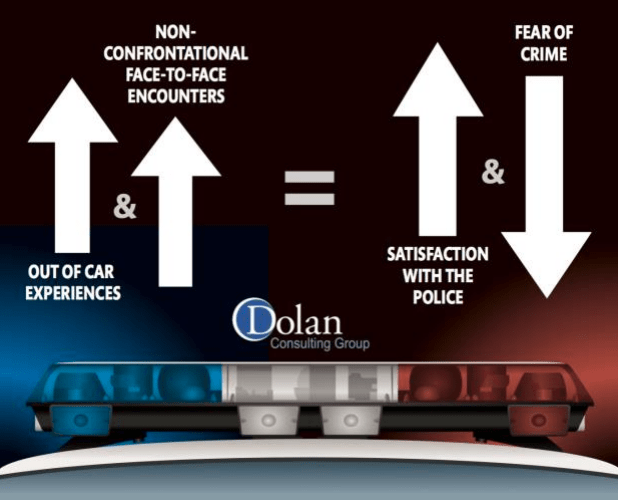
Research suggests increasing the presence of officers in communities, on foot or bike, and not in a vehicle, greatly reduces the fear of crime and policing, said Harry Dolan, former chief of the Grand Rapids Police Department and now CEO of Raleigh, N.C.-based firm Dolan Consulting Group LLC.

But following the terror attacks of 9/11 and other terrorism-related incidents, police departments shifted training resources to shootings — at the expense of community-policing techniques and training.
In Detroit, Police Chief James Craig has touted community-policing since arriving from Cincinnati in 2013. He launched the Neighborhood Police Officers Program in 2014 to get to know businesses, residents, churches and neighborhood groups in their assigned precincts. The program has been credited with improving the trust of Detroit residents. Additional training for officers has focused on defusing volatile situations officers encounter.

The chief also initiated community advisory groups within each precinct to meet regularly with the captains in those districts, said Cathy Govan, executive director of the Detroit Public Safety Foundation, which raises money to support police programs not covered by city budgets.

Dolan, who served as the chief in Grand Rapids from 1998 to 2007, agrees that working with business in city neighborhoods can help boost community policing efforts.

“Businesses have established incredible mechanisms to reach people,” Dolan said. “They can play a vital role in coordinating information sharing and support these initiatives beyond the resources available to local (police) departments.”

Dolan and his consulting firm are hosting a training session, called “Winning Back Your Community: Improving Public Perception of the Police,” on Aug. 3 at the Velocity Center in Sterling Heights.

The original article is published at Crain’s Detroit Business.

Reducing Fear of Crime and Increasing Citizen Support for Police

Extensive research has shown that citizen satisfaction with the police is influenced by their perceptions about neighborhood crime and disorder. Numerous studies have found that citizens had lower overall satisfaction and confidence in the police when they had higher levels of fear of crime in their neighborhood and higher perceptions of neighborhood disorder (such as trash, graffiti, abandoned cars, loud music, loitering homeless people, etc.). Perceptions of crime, however, do not always match actual levels of crime. For example, according to the FBI Uniform Crime Reports, both property and violent crime declined steadily from the 1990s through 2013.1 National survey data from the Gallup organization, however, reveals that fear of crime among Americans steadily increased during the same period.2 While actual crime has decreased, perception of the amount of crime increased.

Another important point to keep in mind is that policing tactics that decrease actual crime may not reduce fear of crime. Extensive research has found that specific policing tactics such as intelligence-led directed patrols, crime prevention by environmental design, nuisance abatement activities, targeting repeat offenders, and other problem-oriented policing strategies are very effective at reducing actual crime, but many of these tactics have no effect on fear of crime or citizen satisfaction with the police.3 Actual crime and perceptions of crime are two separate issues that often need different policing tactics. This research brief will address the available evidence on what law enforcement agencies, and their officers, can do to reduce citizen fears about crime and disorder in local neighborhoods, thereby increasing local citizen satisfaction with the police.

What Reduces Fear of Crime?

Criminal justice researchers Jihong Zhao of Sam Houston State University, Matthew Scheider of the U.S. Department of Justice, and Quint Thurman of the University of the Southwest sought out every published research study of policing tactics in the U.S. that measured whether or not certain police activities reduced citizen fear of crime. They were able to locate 31 such studies published before 2002, many of which examined multiple types of policing activities. They found that almost all of these studies also measured citizen satisfaction with the police before and after implementing changes in policing activities.4 From these studies they were able to determine what kinds of policing tactics reduced fear of crime and increased citizen satisfaction with the police.

These studies revealed that most of the problem-oriented policing strategies that have been so effective at reducing actual crime did not reduce fear of crime, and sometimes even increased fear of crime. For example, when an area is flooded with extra patrol cars aggressively making stops and searching for weapons, the increased police presence makes some citizens perceive the area as dangerous when they had not thought so before. Three policing activities, however, repeatedly showed evidence of reducing fear of crime and increasing citizen satisfaction with the police. These three strategies were police sub-stations, community meetings, and non-enforcement, face-to-face contact between officers and citizens in the neighborhoods of greatest need.5

Dr. Zhao and his colleagues found ten studies that dealt with the implementation of a police substation within a strip mall, housing project, or community center. Some of the substations studied were staffed only by officers, and others by a mixture of officers and civilian personnel. Some substations were operated 24-hours a day, others were only open during the day or evening shift, and a few were manned only a few days and times each week. In every case, the presence of a substation in the neighborhood reduced fear of crime among neighborhood residents. In two-thirds of the studies, the presence of a substation increased citizen satisfaction with the police among neighborhood residents as well.6

Dr. Zhao and his colleagues examined thirteen studies of community meetings of various sorts. Some were neighborhood watch meetings and some were “town hall” style meetings where citizens came to state their grievances with the police, both of which had an impact on reducing fear of crime and increasing satisfaction with the police. The greatest impact on fear of crime and citizen satisfaction, however, came from community problem-solving meetings. This type of meeting involves inviting residents of a specific neighborhood or apartment complex to meet, receive instruction in the S.A.R.A. model of problem-oriented policing, and then work in small groups with officers to identify and develop strategies addressing specific crime problems that were of concern to the residents. The interactions between the citizens and officers in these problem-solving meetings open the eyes of citizens to the realities and difficulties police officers face, but also reveal to officers unknown or untapped community resources available to assist them. All of the studies of community problem-oriented meetings with citizens found that they reduced fear of crime among the participants and increased their satisfaction with the police.7

Dr. Zhao and his colleagues also reviewed ten studies that tested proactive, non-enforcement citizen contacts. These contacts were not public relations fluff, but rather real police work activities focused on maintaining order, detecting crime, and making citizens feel safe.8 For example, in one study the Houston Police Department targeted a couple of high crime blocks and required patrol officers to stop twice during their shift to meet residents at their homes, or business people at their stores or offices. During these brief contacts (usually less than 10 minutes), the officer would introduce him or herself, say the purpose of the visit was simply to get acquainted and learn whether there were any problems in the area the citizen felt the police should know about. The officer then left a business card. For each contact, the officer completed a citizen contact card listing the citizen’s name, address, phone number, and any problems discussed. Neighborhood citizen satisfaction surveys that were conducted before and after officers were ordered to make these contacts revealed that fear of crime fell substantially in the neighborhoods targeted, and citizen satisfaction with the police rose.9

All ten studies of proactive interactions with average citizens found decreases in fear of crime and increases in citizen satisfaction with the police.10 Some of the studies, like the one in Houston, involved officers being given a quota of two interactions per shift, but were also given the discretion to decide where and with whom to conduct these contacts. Other studies involved situations where officers were assigned specific addresses at which they were to conduct their contacts. While attending a Bureau of Justice Administration conference last summer, I learned that the Portland Bureau of Police in Oregon had mated this strategy with its intelligence- led policing efforts. On their department, a computer, through the computer-aided dispatch system, assigns officers to conduct these non-enforcement contacts at specific crime hot spot locations at specific hot crime times. Regardless of the method, the same positive outcomes result.

What do these three strategies – community substations, community problem-solving meetings, and proactive non-enforcement contacts – have in common? All three tactics increase the quantity and quality of face-to-face non-enforcement interactions between police officers and community members in the areas of greatest need of police services. All three of these tactics create situations in which people living in areas of greatest need get to know officers by name and the officers get to know the many good (but apprehensive or fearful) citizens of the neighborhoods they patrol. Too much police-citizen interaction involves the 10% of society that causes trouble for the remaining 90% of the people. We need to increase non-hostile interactions with that 90% of the community.

Are there Newer Studies?

Some might criticize the research Dr. Zhao and his colleagues reviewed as being too old. There are two responses to this argument. First, there is abundant research evidence that human behavior does not change much from century to century, much less from decade to decade. Second, there is more recent research that continues to support the findings of Dr. Zhao and his colleagues.

One study published in 2016 involved showing citizens a photograph of a city street scene and asking them to complete a short survey about how fearful they would be about walking down the street.11 Of the 352 people in the study, some were shown a version of the street scene with foot patrol police officers present, others were shown a version with police cars on the street, and others were shown versions with no police presence visible. The people who were shown the version with the foot patrol officers indicated they were least fearful of walking down the street. However, those who were shown the version with the two police cars on the street were the most fearful of walking down the street. In other words, when they saw two officers walking in the area they were less fearful, but when they saw two patrol cars they were more fearful than if there had been no police presence at all.

Think about that from your own personal experience. When you are out of your jurisdiction and out of uniform, do you feel more comfortable approaching a uniformed officer who is standing in line at a fast food restaurant, or an officer sitting in his patrol car in a vacant parking lot? When on duty, are you more at ease when people approach you when you are inside or outside of your patrol vehicle? Apparently there is something going on psychologically for both the officer and the citizen regarding the patrol vehicle.

In another study, researchers surveyed 977 residents of apartments in one large city. The survey contained questions about a variety of different city services, but included questions about fear of crime, satisfaction with the police. These residents were surveyed about how often they saw police cars, foot patrols, or had informal face-to-face contact with police officers. The residents who reported having had informal face-to-face contact with the police in the last six months had the lowest fear of crime and the highest satisfaction with the police, followed by those who had seen foot patrols. Having seen police cars in the neighborhood had no influence on fear of crime or satisfaction with the police.12

A final study from England assigned foot patrol officers or civilian police volunteers to patrol crime hot spot locations at peak times for crimes to occur. Like the officers in Houston described earlier, these officers approached citizens, introduced themselves, and asked if there were any crime or disorder problems needing their attention. These officers averaged only 21 minutes at each hot spot location but they ended up significantly reducing citizen fear of crime and increasing general public satisfaction with the police. Because they were a police presence targeted at hot spot locations and times, they also reduced reported crimes at these hot spots by 39%, and reduced emergency calls for service by 20%.13

Conclusion

Remember that the tactics that reduce actual crime have little impact on fear of crime and citizen satisfaction with the police. Citizen perceptions of crime and the police are unrelated to actual crime rates. One thing that law enforcement agencies can do to improve citizen satisfaction and confidence in the police is to help reduce citizen fear of crime, especially in the neighborhoods of most need. Research has revealed that the most effective tactics law enforcement agencies can implement to reduce citizen fear of crime, and increase citizen satisfaction with the police, involve non-confrontational, face-to-face interaction between officers and average citizens in the neighborhoods of greatest need of police services. Proactive non-enforcement citizen contacts, community problem-solving meetings, and interactions through neighborhood substations are three examples of tactics that lower fear and increase satisfaction with the police.

This is really the type of policing that goes on every day in small town police departments all across the nation. In small towns and villages, the residents usually know their officers by name and vice versa, with several personal friendships existing between the two. Officers hear concerns from residents almost daily and often develop solutions in cooperation with the reporting residents. The police station is usually within walking distance to everyone in town and the door is always open. Some residents even routinely stop by the station just to visit.14 Perhaps through increasing non-enforcement, face-to-face official police contacts between officers and average citizens, we can move closer to this ideal in every community.


References

1 Worrall, J. (2014). Crime Control in America. Boston, MA: Pearson.

2 Ibid.

3 Hoover, L. T. (2014). Police Crime Control Strategies. Clifton Park, NY: Cengage.

4 Zhao, J., Scheider, M., & Thurman, Q. (2002). The effect of police presence on public fear reduction and satisfaction: a review of the literature. The

Justice Professional, 15(3), 273- 299.

5 Ibid.

6 Ibid.

7 Ibid.

8 Ibid.

9 Brown, L., & Wycoff, M. A. (1987). Policing Houston: reducing fear and improving service. Crime and Delinquency, 33(1), 71-89.

10 Zhao, J., Scheider, M., & Thurman, Q. (2002).

11 Doyle, M., Frognar, L., Andershed, H., & Andershed, A. (2016). Feelings of safety in the presence of the police, security guards, and police volunteers. European Journal of 

Criminal Policy and Research, 22(1), 19-40.

12 Salmi, S., Gronroos, M., & Kreskinen, E. (2004). The role of police visibility in fear of crime. Policing: IJPSM, 27(4), 573-591.

13 Arien, B., Weinborn, C. & Sherman, L. W. (2016). “Soft policing” at hot spots: do police community support officers work? A randomized, controlled trial. Journal of 

Experimental Criminology.

14 Weisheit, R. A., Falcone, D. A., & Wells, L. E. (2005). Crime and Policing in Rural and Small-Town America. Prospect Heights, IL: Waveland Press.

Threats To Surviving This Job

Law enforcement is one of the most difficult, stressful, and dangerous careers an individual can pursue. The threats to your life, however, come from more sources than the knives and guns of evil doers. In fact, less than 20% of the law enforcement officers who died over the last three years died as a result of an assault. Even after you leave the job, the things you were exposed to as a law enforcement officer can still shorten your life. Recent research has revealed that law enforcement officers still only live an average of 6 years beyond retirement.1 While the average life expectancy in the U.S. is about 78 years, it is only 66 years for law enforcement officers.2

Just as it is important in officer safety training to identify and analyze the threats posed by criminals, we should also be doing the same for threats posed by sources other than an attacker. Just as we pass along intelligence updates about the latest concealed weapon or BOLO memos about dangerous persons in our jurisdictions, we should be passing along information about the other lethal risks law enforcement officers face. The information below will remind you of the many health dangers you face in a law enforcement career, and will conclude with a brief overview of ways to protect yourself against these many dangers.

Law Enforcement Officer Mortality

According to the Officer-Down Memorial Page website, over the last three years 398 law enforcement officers died while on duty or in the line of duty.3 When one adds the estimated number of active law enforcement officers who committed suicide, the total number of officer deaths over the last three years rises to 806 deaths, or an average of 269 officer deaths each year.4 As there are approximately 809,000 full and part-time law enforcement officers at the local, state, and federal level in the U.S., this means 1 out of every 3,000 officers dies at work or because of work each year.5

Deaths Due to Violence

Over the last three years, 157 law enforcement officers have died from a violent attack. Of these deaths, 119 involved a firearm, 23 a vehicle used as a weapon, 7 bombs, 6 clubs or fists, and 2 involved an edged weapon. Together, these deaths only made up 19.5% of all the officer deaths from 2013 through 2015.

Deaths Due to Accidents

Over the last three years, 148 law enforcement officers died in an accident. Of these deaths, 126 involved a vehicle, such as cars, motorcycles, aircraft, and watercraft. They involved incidents such as normal driving, emergency driving, and being hit by a vehicle as a pedestrian. The remaining 22 deaths resulted from accidental causes such as drowning, electrocution, firearms accidents, and falls.

Deaths Due to Health or Exposures

Over the last three years, 93 law enforcement officers died at work due to health issues, or died due to health problems from things they were exposed to at work. Of these deaths, 46 were due to exposures at work to such things as HIV/AIDS, hepatitis, tuberculosis, or toxic substances. The remaining 47 died at work due to a heart attack, stroke, or brain aneurism. In addition to these numbers, it is unknown how many officers died in retirement over the last three years due to health problems they developed from this career. Retired law enforcement officers die of heart disease, cancer (esophageal, colon, kidney, and lymphatic), and cirrhosis of the liver at much higher rates than the average U.S. retired population.6

Deaths Due to Suicide

Suicide is the leading cause of death among active law enforcement officers. All of the causes of death discussed above, when combined, only account for half of the officer deaths in the U.S. over the last three years. While firm numbers are hard to get, it is estimated that at least 408 law enforcement officers took their own lives from 2013 through 2015.7

Training to Survive

The odds are that you already participate in officer safety training to combat threats of violence. You train with your firearm and other weapons. You practice your defensive tactics techniques. You are constantly on guard mentally, observing for possible physical threats. You likely read and discuss books and articles regarding officer safety techniques, but do you do the same to defend against the other (more prevalent) dangers from your job? Do you go to training on officer wellness? Do you read books and articles about how to survive this career and live a healthy retirement? Do you utilize the techniques that can help alleviate stress from the job in a safe and healthy way? Do you practice the techniques that can improve your overall physical and psychological well-being? Do you even know what these techniques are?

There are a number of techniques that have been proven to help law enforcement officers reduce stress, prevent suicide, and reduce the risk of physical and psychological health issues. First, just as in training against violent attacks, mental conditioning helps officers prepare for non-violent situations that still pose career dangers or stressors. Visualizing potential situations and thinking through in advance how you would handle them improves performance and reduces stress. Second, just as is the case on the firing range, breathing techniques can help lower an officer’s hyperarousal to stressful circumstances, reducing tunnel vision and giving the officer clearer thoughts. Third, physical conditioning, in the form of exercise, proper diet, sufficient sleep, and avoiding substances harmful to your body, can have an enormous impact on fighting off illnesses and reducing stress. Finally, hobbies, interests, and relationships outside of public safety work are crucial to an officer’s physical and mental health.8

We at the Dolan Consulting Group hope that you take as much interest in your total safety and well-being as you do in your safety from violent attack. Below are resources we highly recommend that you utilize to improve your health, safety, and well-being. Stay safe!


Books:

Gilmartin, K. M. (2002). Emotional Survival for Law Enforcement: A Guide for Officers and their Families. Tucson, AZ: E-S Press.

Blum, L. N. (2000). Force Under Pressure: How Cops Live and Why They Die. New York, NY: Lantern Books.

Barker, J. C. (1999). Danger, Duty, and Disillusion: The Worldview of Los Angeles Police Officers. Prospect Heights, IL: Waveland Press.
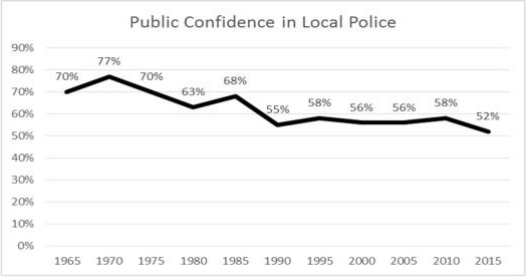
 

Richard R. Johnson is the Chief Academic Officer at the Dolan Consulting Group. He holds a bachelor’s degree in public administration and criminal justice from Indiana University’s School of Public and Environmental Affairs (SPEA), a master’s degree in criminology from Indiana State University, and a doctorate in criminal justice from the University of Cincinnati. He was formerly a university professor in the area of criminal justice, leaving the University of Toledo at the rank of full professor. Dr. Johnson has published more than 50 articles on policing issues in peerreviewed research journals, including such top ranked journals as Justice Quarterly, Crime & Delinquency, Criminal Justice and Behavior, and Journal of Criminal Justice. Prior to becoming an academic, Dr. Johnson served as a trooper with the Indiana State Police, and as a criminal investigator with the Kane County State’s Attorney Office in Illinois.

DOLAN CONSULTING GROUP

The Dolan Consulting Group LLC is an organization of public policy experts who address issues related to public service provision organizations, such as law enforcement agencies, corrections agencies, fire departments, emergency medical services, hospitals, and school districts. We provide services such as assessments, training, and research with the goal of improving the operations and outputs of these agencies through evidence-based solutions. Our staff includes former public safety leaders, attorneys, and statisticians, all of whom also have real world experience working in government and conducting quality training.


Dolan Consulting Group

Harry P. Dolan, President and CEO

2840 Plaza Place, Suite 325

Raleigh, NC 27612

info@DolanConsultingGroup.com


References

1 Brandl, S. G., & Smith, B. W. (2013). An empirical examination of retired police officers’ length of retirement and age at death. Police Quarterly, 16(1), 113-123.

2 Ruiz, J., & Morrow, E. (2005). Retiring the old centurion: life after a career in policing. International Journal of Public Administration, 28, 1151-1186.

3 Officer Down Memorial Page: https://www.odmp.org/

4 O’Hara, A. F., Violanti, J. M., Levenson, R. L., & Clark, R. G. (2013). National police suicide estimates: web surveillance study III. International Journal of Emergency Mental Health, 15(1), 31-38.

5 U.S. Bureau of Justice Statistics: http://www.bjs.gov/index.cfm?ty=tp&tid=7

6 Ruiz, J., & Morrow, E. (2005). Retiring the old centurion: life after a career in policing. International Journal of Public Administration, 28, 1151-1186; Violanti, J. M., Vena, J. E., & Petrolia, S. (1998). Mortality of a police cohort: 1950-1990. American Journal of Industrial Medicine, 33, 366-373.

7 O’Hara, Violanti, Levenson, & Clark (2013).

8 Blum, L. N. (2000). Force Under Pressure: How Cops Live and Why They Die. New York, NY: Lantern Books.

Aristotle helps officers in Greer learn to manage conflict

Officers undergoing training on how to de-escalate a tense situation focused on a central question Thursday: How would Aristotle work as a beat cop?

Retired Raleigh Police Chief Harry Dolan shared his answer to that question, developed from his 32 years as a police officer, with a group of about 60 officers from Greer and neighboring law enforcement agencies at Greer City Hall. The Greer Police Department offered the session to provide additional insight on managing verbal conflicts.

Officers learned that communicating with logic and ethics, reading body language and treating others with respect are some of the most important skills they can use while on patrol.

Not enough officers are being reminded of those tactics when they join the force, Dolan said.

“Everyone wants to be treated with dignity and respect,” he said. “The most powerful word in the English language is empathy.”

Dolan said the way an officer responds to a noncompliant person could determine whether that person ends up complying or becoming combative.

Read the full article on GoUpstate.com